

Marshall Islands📸 Photo album · 3 photos · Ultra-HD
Turquoise lagoons and coral atolls in the central Pacific
🕒 –:– local time0 stories this week0 sources 3 top placesCapital Majuro
The Marshall Islands were settled by Micronesian voyagers roughly two thousand years ago or more. Marshallese navigators became masters of the open ocean, using ingenious stick charts made from palm ribs and shells to map how ocean swells bend around islands. Society was organised into clans and ruled by iroij (chiefs), with land rights passed down through the mother's line, a system that still matters greatly today.
Spanish navigators sighted the islands in the sixteenth century, and the group was later named after British captain John Marshall, who sailed through in 1788. Missionaries and copra traders arrived in the nineteenth century, and Germany annexed the islands in 1885. Japan seized them in 1914 and governed them under a League of Nations mandate, building military bases in the 1930s. During the Second World War US forces captured Kwajalein, Majuro and Enewetak in 1944, and wrecks and relics from these battles still lie on atolls and lagoon floors.
After the war the islands became part of the US-administered Trust Territory of the Pacific Islands. Between 1946 and 1958 the United States conducted 67 nuclear tests at Bikini and Enewetak atolls, forcing the relocation of communities and leaving a lasting legacy that the Marshallese still live with. The country adopted its own constitution in 1979 and signed a Compact of Free Association with the US, which took effect in 1986, before joining the United Nations in 1991.
Today the Marshall Islands is a nation of low-lying coral atolls facing the challenge of rising seas. Visitors are rewarded with some of the Pacific's most untouched lagoons, world-class wreck diving, warm hospitality and a living culture of canoe building, weaving and traditional navigation. Bikini Atoll is a UNESCO World Heritage Site that stands as a powerful reminder of the nuclear age.
Entry rules depend on your passport and change often.
Before you book, check the official rules for your passport:
The latest visa and entry news for Marshall Islands appears below as soon as publishers report it.
🛰️ The agents haven't spotted fresh news about Marshall Islands in the last few days – here is the travel guide, plus the latest from nearby countries.
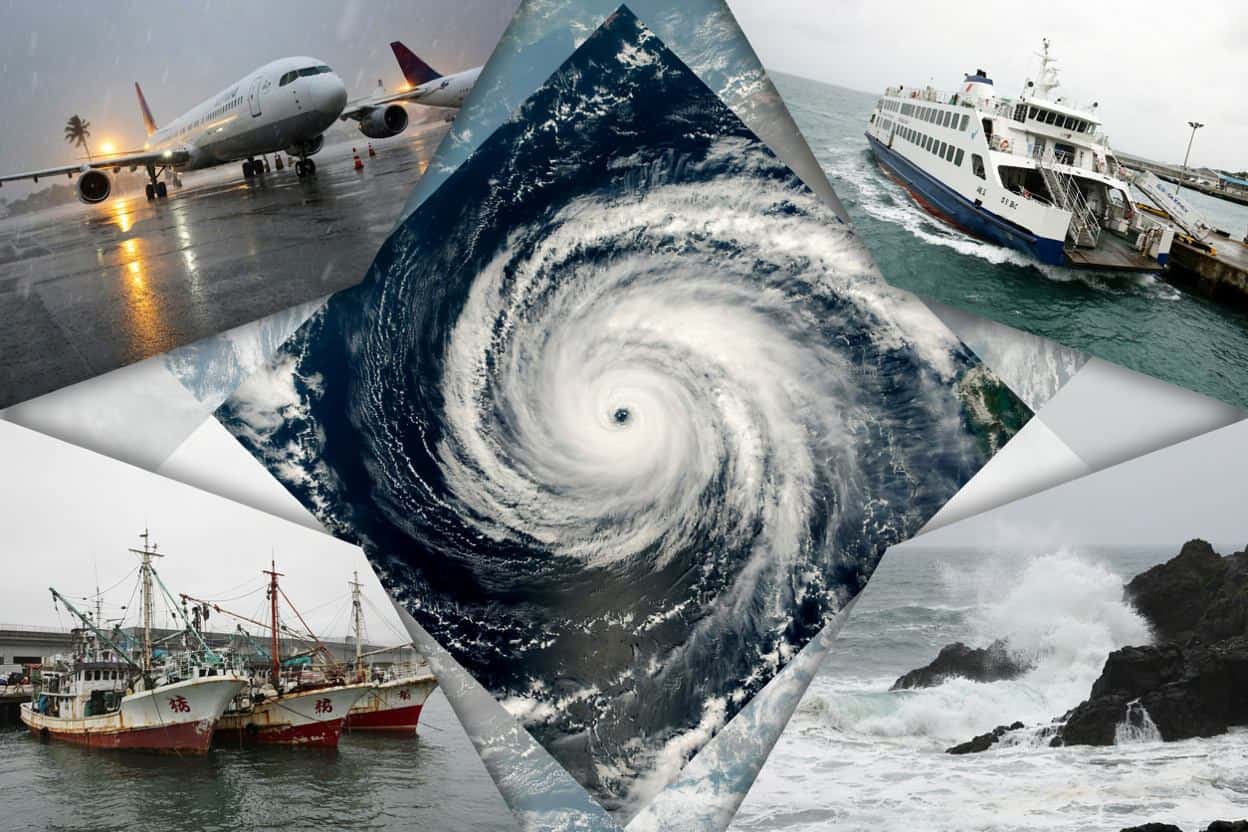
Travel Disruption Warning: Cataclysmic Super Typhoon Choi-Wan Fiercely Ravages Northern Mariana Islands, Guam And Other Countries Here’s the Latest Wind Speed Data Travellers Need To Know Super Typhoon Choi-Wan travel disruption…
 #Northern Mariana Islands#Guam#Typhoons#Islands
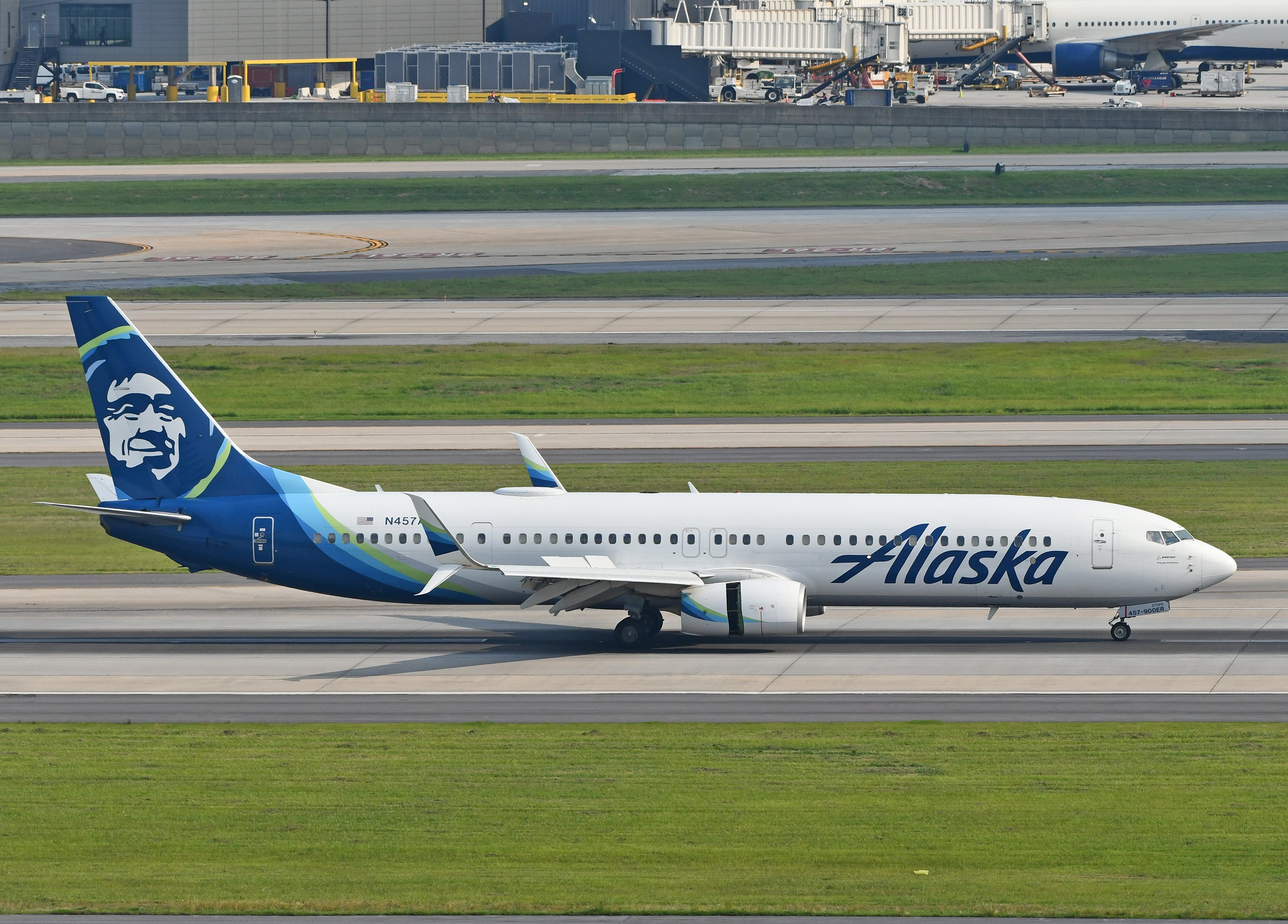
Alaska’s Atmos Rewards is a valuable airline loyalty program thanks to its high-value airline partners, such as Cathay Pacific and Fiji Airways, and excellent redemption rates on American Airlines flights. Given the number of…
 #United States#Hong Kong#American Airlines#Alaska Airlines
Philippine Airlines (PAL) announced it will restore nonstop flights between Ninoy Aquino International Airport (MNL) in Manila and…
 #Philippines#Northern Mariana Islands#Manila#Saipan
The Marshall Islands are hot and humid all year, with daytime highs around 29–30 °C. The northern atolls are much drier than the southern atolls such as Majuro.
Typical daytime highs and rain in Majuro (approximate averages).
Day 1: Majuro town and the Alele Museum. Day 2: snorkelling or a wreck dive. Day 3: drive to Laura Beach. Day 4: lagoon boat trip or fishing.
Day 1-3: Majuro highlights. Day 4-6: fly or boat to Arno for village stays and pristine lagoons. Day 7-8: return to Majuro for diving and handicraft shopping.
Backpacker budget: about $70–100 a day
Emergency:
Majuro's Amata Kabua International Airport (MAJ) has flights connecting to Hawaii, Guam and other Micronesian islands. Some flights also stop at Kwajalein.
✈️ Cheap flights to Marshall Islands: airports, flight times & best time to fly →
The Marshall Islands are generally safe, with low crime. Health care is limited, so travel insurance with evacuation cover is essential.
December to April is drier, with steady breezes. The rest of the year is warm, but expect more rain.
Four or five days is enough to explore Majuro. Allow a week or more to visit outer atolls, as flights are infrequent.
Entry rules depend on your passport, so check the official Marshall Islands government site or consulate before you travel.
Marshallese and English are both official. English is widely spoken in Majuro.
Approximate daily cost per person (stay, food, local transport).
Shared taxis run up and down the main road in Majuro. Small boats and domestic flights reach the outer atolls.
Nothing in this tab yet – the agents add new stories every few minutes.
🌏 You reached the start of our archive.

 NauruA tiny coral island nation with rugged cliffs and quiet beaches
.jpg/500px-Landscape,_Tuvalu,_2011._Photo-_DFAT_(12779525995).jpg)
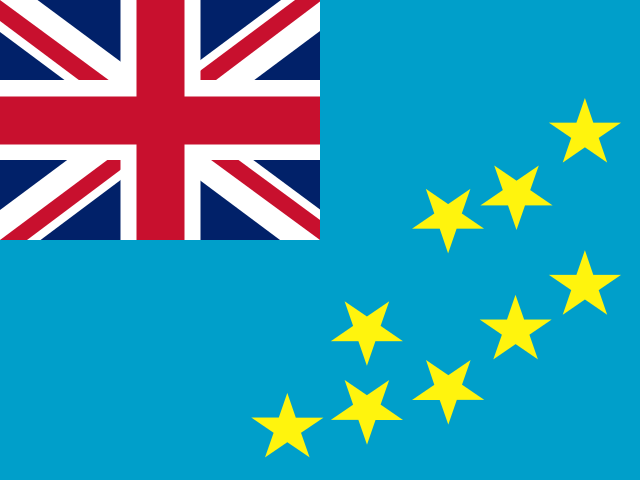 TuvaluTiny coral atolls and a calm lagoon far from the crowds
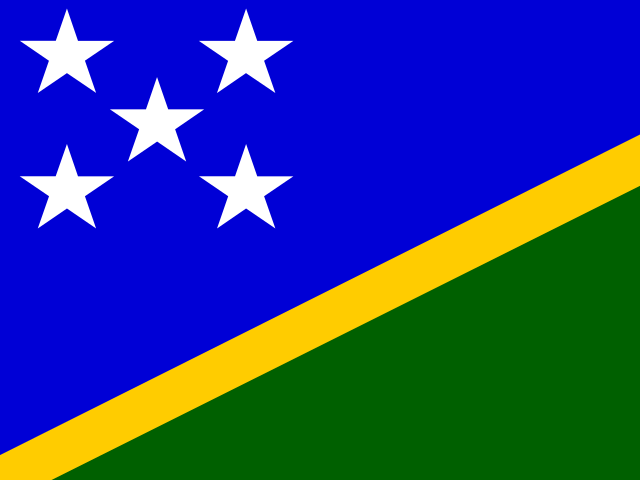 Solomon IslandsWWII history, lagoons and village life off the beaten track
.jpg/500px-Pacific_Partnership_2024-2_Band_Performs_at_Gilman_Elementary_School_in_Yap,_Federated_States_of_Micronesia_(8643664).jpg)
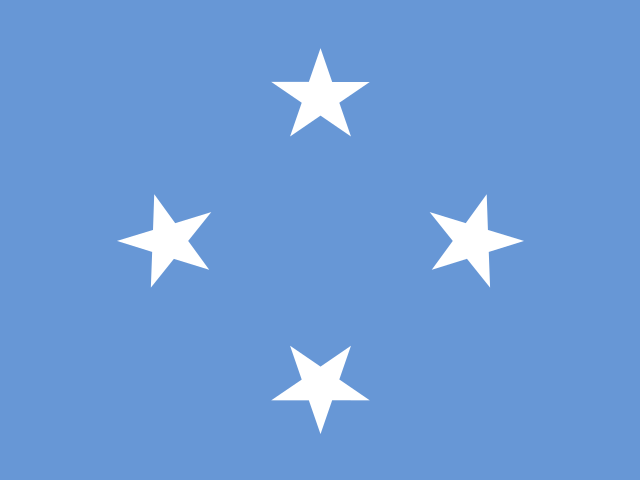 MicronesiaAncient stone ruins, WWII wrecks and remote Pacific islands
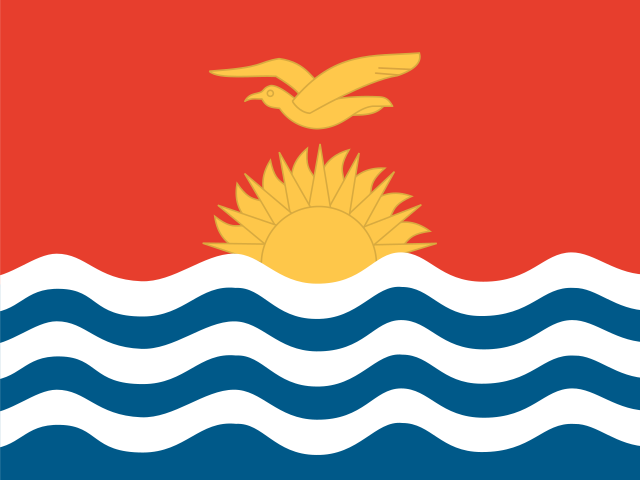 KiribatiRemote coral atolls on both sides of the date line
 VanuatuActive volcanoes, blue holes and WWII wreck diving
_-_August_2016.jpg/500px-Naviti_island,_Yasawa,_Fiji_(1)_-_August_2016.jpg)
 FijiBula spirit, coral islands and soft white beaches
 Northern Mariana IslandsWarm lagoons, WWII history and island beaches near Guam