High on the Andean altiplano, the shores of Lake Titicaca nurtured some of South America's earliest complex societies. Between roughly 500 and 1000 AD the city of Tiwanaku became the centre of a powerful civilisation, building monumental stone gateways and platforms and farming the cold plateau with ingenious raised fields. After its decline, Aymara-speaking kingdoms ruled the highlands until they were absorbed into the expanding Inca Empire in the 15th century.
Spanish conquistadors arrived in the 1530s, and in 1545 the discovery of a mountain of silver at Potosí changed world history. Cerro Rico's mines, worked by Indigenous labourers under the brutal mita draft system, poured silver into Spain's treasury and global trade, and for a time Potosí was one of the largest cities in the Americas. The colony, known as Upper Peru or Charcas, was governed from the elegant city now called Sucre.
Read the full history
After a long struggle, independence was declared in 1825 and the new republic was named after the liberator Simón Bolívar. The following century brought painful territorial losses, including the Pacific coastline to Chile in the War of the Pacific (1879–1884) and much of the Chaco lowlands after war with Paraguay in the 1930s. A revolution in 1952 brought land reform, universal suffrage and nationalised mines, followed by decades of alternating civilian and military rule before democracy took firm root in the 1980s. A new constitution in 2009 renamed the country the Plurinational State of Bolivia, recognising its many Indigenous nations.
For travellers, Bolivia is one of the continent's most authentic destinations. Indigenous languages, dress and festivals remain part of everyday life, while UNESCO-listed sites such as Tiwanaku, colonial Potosí and Sucre, and the Jesuit missions of Chiquitos sit alongside staggering landscapes, from the Salar de Uyuni to the Amazon rainforest.
Timeline
c. 500-1000Tiwanaku civilisation flourishes near Lake Titicaca
15th centuryHighlands incorporated into the Inca Empire
1545Silver discovered at Cerro Rico, Potosí
1825Independence declared; country named after Simón Bolívar
1879-1884Coastline lost in the War of the Pacific
1932-1935Chaco War with Paraguay
1952National Revolution brings land reform and universal suffrage
2009New constitution creates the Plurinational State of Bolivia
Bolivia🛂 Visa & entry
Entry rules depend on your passport and change often.
Andean Community – Andean Community member – neighbours can often travel with a national ID card.
Mercosur – Mercosur member – South American neighbours can often travel with a national ID card.
Before you book, check the official rules for your passport:
Exercise increased caution in Bolivia due to crime , unrest , and health . Some areas have increased risk. Read the entire Travel Advisory. Crime Petty crime is common, especially in popular tourist spots. Stay aware of your…
Cross the Salar de UyuniRide a 4x4 across the world's largest salt flat, a blinding white expanse that turns into a giant mirror after rain.
Ride La Paz's cable carsGlide over the city on the vast urban cable-car network for jaw-dropping views of the canyon and snowcapped Illimani.
Cycle the Death RoadDescend thousands of metres from icy Andean passes to steamy Yungas jungle on the infamous former highway.
Sleep on Isla del SolHike between Inca ruins on Lake Titicaca's Island of the Sun and watch the sun set over the deep blue water.
Descend into Potosí's minesJoin a cooperative-run tour inside Cerro Rico for a sobering look at centuries of mining life.
Wander white SucreExplore the graceful whitewashed streets, churches and markets of Bolivia's constitutional capital.
See the coloured lagoonsSpot flamingos on the blood-red Laguna Colorada and geysers steaming at dawn in the far southwest.
Explore the AmazonTake a riverboat from Rurrenabaque into Madidi National Park or the pampas to spot caimans, capybaras and pink river dolphins.
Walk among dinosaur tracksFollow fossilised footprints and descend into canyons and caves in Torotoro National Park.
Visit TiwanakuStand before the Gate of the Sun at the ruins of one of the Andes' great ancient cities.
Bolivia🗺️ Where to visit in Bolivia
Where to go in Bolivia
La PazAltiplano · cityA wildly scenic city tumbling down a canyon, with witches' markets, cable cars and nearby Valle de la Luna.
Salar de UyuniSouthwest · salt flatA surreal white desert plus multi-day tours to lagoons, volcanoes and geysers near the Chilean border.
📍
Lake Titicaca & CopacabanaAltiplano · lakeA pilgrimage town on the shore of the high lake and gateway to the Islands of the Sun and Moon.
SucreCentral valleys · colonial cityA relaxed, UNESCO-listed colonial city, popular for Spanish lessons and mild weather.
PotosíHighlands · silver cityOnce among the richest cities on Earth, with a historic mint and baroque churches at dizzying altitude.
📍
Madidi National ParkAmazon basin · rainforestOne of the most biodiverse protected areas on the planet, reached from the river town of Rurrenabaque.
📍
Torotoro National ParkPotosí department · canyonsDramatic canyons, caves and dinosaur footprints in a remote, rewarding landscape.
📍
SamaipataSanta Cruz department · valleysA laid-back village near the ancient carved rock of El Fuerte and cloud forests of Amboró National Park.
Bolivia✨ Must-do experiences
Take a 3-day jeep tour across the Uyuni salt flats
Ride the Mi Teleférico cable cars in La Paz
Visit Isla del Sol on Lake Titicaca
Spot wildlife on an Amazon pampas tour
Bolivia🍽️ Taste of Bolivia
Salteñas – juicy baked pastries filled with stew
Silpancho – thin beef cutlet with rice, potatoes and egg
Sajta de pollo – chicken in spicy yellow chilli sauce
Api – warm purple corn drink, often with fried pastry
Bolivia🌦️ Weather & best time to visit Bolivia
Best time to visit Bolivia
Bolivia's climate depends far more on altitude than season: the altiplano is cool by day and very cold at night, while the Amazon lowlands are hot and humid all year. Rains fall mainly from December to March.
BestMay–October: the dry season brings clear skies, best for hiking, the Salar tours and the Amazon, though highland nights are freezing.
ShoulderApril and November: fewer travellers, with a chance of seeing the Salar's mirror effect around the edges of the rainy season.
AvoidJanuary–February: heavy rains can cause landslides, flooded roads and closures in the lowlands and Yungas – though this is when the Salar mirror is most likely.
15°💧💧💧Jan
15°💧💧Feb
15°💧💧Mar
15°💧Apr
14°☀️May
13°☀️Jun
13°☀️Jul
14°☀️Aug
15°💧Sep
16°💧Oct
17°💧Nov
16°💧💧Dec
Typical daytime highs and rain in La Paz (approximate averages).
Bolivia🎉 Festivals & events in Bolivia
February/March
Carnaval de OruroA spectacular UNESCO-recognised parade of devil dancers, masks and brass bands in honour of the Virgin of the Mineshaft.
January–February (from 24 January)
AlasitasLa Paz's fair of miniatures, where people buy tiny houses, cars and banknotes to be blessed for luck in the year ahead.
May/June
Gran PoderThousands of dancers in glittering costumes parade through La Paz in one of the city's biggest celebrations.
June (21st)
Aymara New Year (Willkakuti)Crowds gather at Tiwanaku before dawn on the winter solstice to greet the first rays of the sun.
August
Virgen de UrkupiñaA huge pilgrimage and folk-dance festival in Quillacollo near Cochabamba.
Bolivia🧭 Bolivia itinerary ideas
How many days in Bolivia?
5 daysLa Paz & the salt flats
Day 1-2 acclimatise in La Paz with the cable cars, markets and a half day at Valle de la Luna. Day 3-5 take an overnight bus or short flight to Uyuni for a tour of the salt flat, train cemetery and Isla Incahuasi.
10 daysHighlands classic
Day 1-2 Lake Titicaca and Isla del Sol, then Day 3-4 La Paz and a Death Road ride. Day 5-6 Sucre's colonial streets and Day 7 Potosí's mines, finishing with Day 8-10 on a three-day tour across the Salar and southwestern lagoons.
Bolivia🎒 Backpacking Bolivia – tips & hacks
Backpacker budget: about $25–40 a day
Bolivia is one of South America's cheapest countries – set lunch menus (almuerzo) in local eateries are filling and very good value.
Overnight buses link the main cities; pay a little more for a reputable company with semi-cama or cama seats for safety and comfort.
Sucre is a great budget base for cheap Spanish lessons and homestays.
Compare several agencies in Uyuni or Tupiza before booking a salt-flat tour, and ask about vehicle condition and the driver's safety record.
Take altitude seriously: spend your first days taking it easy in La Paz, drink plenty of water and try coca tea.
Bolivia🛡️ Safety & money in Bolivia
Stay safe
Use registered radio taxis or ride-hailing apps, especially at night and from bus stations, to avoid fake-taxi scams.
Road blockades and protests are common and can strand travellers – keep plans flexible and follow local news.
Choose Death Road and Salar tour operators with good safety records and well-maintained equipment.
Watch for pickpockets in crowded markets and on buses, and keep bags on your lap rather than in overhead racks.
Money
The boliviano is the currency; carry small notes, as change can be scarce in rural areas and markets.
ATMs are available in cities and Uyuni, but cash is essential for remote tours, buses and small towns.
Tipping is modest – rounding up or leaving a little in restaurants is appreciated, and tour guides and drivers welcome tips.
Emergency: 110 police · 118 ambulance · 119 fire
Bolivia🛬 Getting to Bolivia
The main international airports are El Alto (La Paz) and Viru Viru (Santa Cruz). Popular land crossings include Peru via Copacabana or Desaguadero, Chile via San Pedro de Atacama tours to Uyuni, and Argentina at Villazón.
Bolivia has two capitals: La Paz is the seat of government, while Sucre is the constitutional capital.
The Salar de Uyuni is the largest salt flat in the world and holds huge lithium reserves.
La Paz has one of the world's largest urban cable-car networks, used as everyday public transport.
Although landlocked, Bolivia still maintains a navy, which trains on Lake Titicaca.
The constitution recognises Spanish and dozens of Indigenous languages as official, including Quechua, Aymara and Guaraní.
Bolivia❓ Bolivia travel FAQ
Bolivia travel questions
Is Bolivia safe for tourists?
Bolivia is generally safe for travellers who take sensible precautions. The main issues are petty theft, taxi scams and road blockades, so use registered taxis and keep plans flexible. Check your government's latest travel advice before you go.
When is the best time to visit Bolivia?
The dry season from May to October is best for most travel, with clear skies over the altiplano. For the mirror effect on the Salar de Uyuni, visit during or just after the rains, roughly January to April.
How do I deal with altitude in Bolivia?
La Paz sits above 3,600 metres, so take your first days slowly, drink water, avoid heavy alcohol and try coca tea. Seek medical advice before travel if you have health concerns.
How many days do you need in Bolivia?
One week covers La Paz, Lake Titicaca and the Salar de Uyuni. Two to three weeks lets you add Sucre, Potosí and the Amazon.
Do I need a visa for Bolivia?
It depends on your passport. Check the official Bolivian government site or your nearest embassy before you travel.
Bolivia💰 What a trip costs
$price level
$25–40backpacker / day
$60–120mid-range / day
Approximate daily cost per person (stay, food, local transport).
Bolivia🚌 Getting around
Buses connect most towns cheaply; domestic flights save time on long routes. Take it slow at first because of the high altitude.
Bolivia🛕 Sacred & spiritual places
Basilica of Our Lady of Copacabana – Moorish-style shrine of Bolivia's patron saint
Isla del Sol – Sacred island in Inca belief, with ancient ruins
Tiwanaku – Ancient ceremonial centre with temples and stone gates
Bolivia🤝 Local etiquette
Ask before photographing people, especially Indigenous women
Greet shopkeepers with 'Buenos días' before asking for things
Bargain politely in markets
Nothing in this tab yet – the agents add new stories every few minutes.
📰 Older Bolivia stories Everything our agents ever found – keeps loading as you scroll



 ParaguayJesuit ruins, river towns and South America's quiet heart
.jpg/500px-Foz_do_Igua%C3%A7u_-_State_of_Paran%C3%A1,_Brazil_-_panoramio_(18).jpg)

 BrazilBeaches, rainforest, samba and carnival energy
 PeruMachu Picchu, Andean villages and world-class food
 UruguayLaid-back beaches, colonial streets and mate culture
,_Punta_Pitt,_isla_de_San_Crist%C3%B3bal,_islas_Gal%C3%A1pagos,_Ecuador,_2015-07-24,_DD_11.JPG/500px-Lobo_marino_(Zalophus_californianus_wollebaeki),_Punta_Pitt,_isla_de_San_Crist%C3%B3bal,_islas_Gal%C3%A1pagos,_Ecuador,_2015-07-24,_DD_11.JPG)

 EcuadorGalápagos wildlife, Andean volcanoes and Amazon rainforest
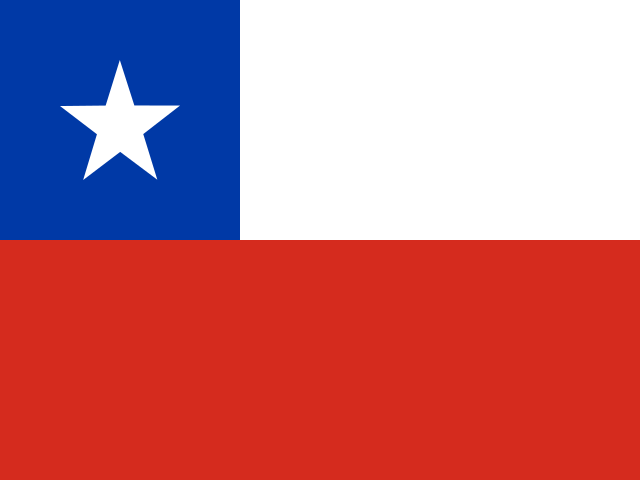 ChileFrom the driest desert to Patagonian peaks and Easter Island
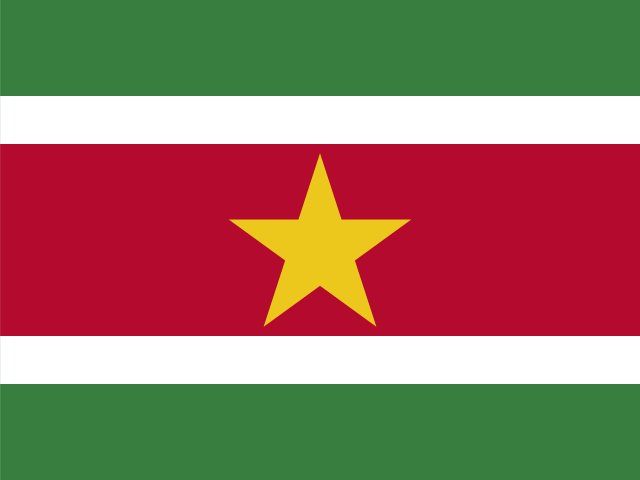 SurinameDutch colonial charm, rainforest rivers and many cultures
.jpg/500px-Iwokrama_Rainforest,_Guyana_(12179378186).jpg)
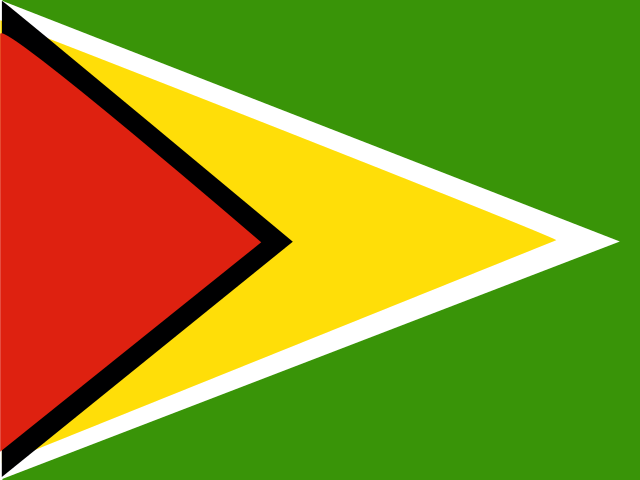 GuyanaGiant waterfalls, wild savannahs and untouched rainforest