The Seychelles are among the last places on Earth to be settled by humans. Arab and other Indian Ocean sailors may have known the islands for centuries, and Portuguese navigators sighted parts of the archipelago in the early 1500s, but there was no permanent population. For a time the granite islands were a hideout for pirates, fuelling legends of buried treasure that still draw curious visitors today.
France claimed the islands in 1756 and named them after Jean Moreau de Séchelles, a finance minister under King Louis XV. The first settlers arrived on Sainte Anne Island in 1770: a small group of French colonists accompanied by enslaved Africans and Indians, who planted spices, cotton and food crops. During the Napoleonic Wars, Britain took control, and the islands were formally ceded to Britain in 1814. They were administered from Mauritius, and after slavery was abolished, freed Africans and later Indian and Chinese migrants joined the population, creating the rich Creole culture of today.
Read the full history
In 1903 the Seychelles became a separate British Crown Colony, with Victoria as its capital. Copra, cinnamon and vanilla were the mainstays of the economy for much of the 20th century. The archipelago gained independence on 29 June 1976. A period of one-party rule followed from the late 1970s, before multiparty democracy was restored in the early 1990s, and the country has since developed into one of Africa's most prosperous nations, built on tourism and fishing.
Modern Seychelles has made conservation central to its identity, protecting a large share of its land and ocean. For visitors, this means pristine granite beaches, the UNESCO-listed Vallée de Mai with its giant coco de mer palms, the remote Aldabra Atoll with its giant tortoises, and a warm Creole culture expressed in spicy curries, sega music and the Seychellois Creole language spoken alongside English and French.
Timeline
1502Portuguese navigators sight islands in the archipelago
1756France claims the islands and names them after Moreau de Séchelles
1770First permanent settlers arrive on Sainte Anne Island
1814Seychelles is formally ceded to Britain
1903Seychelles becomes a separate British Crown Colony
1976Independence is declared on 29 June
1993Multiparty democracy is restored under a new constitution
Seychelles🛂 Visa & entry
Entry rules depend on your passport and change often.
Commonwealth – Commonwealth member.
Before you book, check the official rules for your passport:
South Africa Joins Seychelles and Other African Destinations in the Race for Luxury Travellers from Europe and the Americas South Africa, Seychelles and more African destinations compete for luxury travellers from Europe and the…
Photograph Anse Source d'ArgentWade through shallow turquoise water between sculpted pink granite boulders on La Digue.
Walk the Vallée de MaiExplore a primeval palm forest on Praslin where the giant coco de mer nut grows.
Cycle around La DiguePedal sleepy island lanes past ox carts, plantation houses and empty beaches.
Snorkel Sainte Anne Marine ParkGlide over coral and tropical fish in a protected marine park just off Mahé.
Meet giant tortoisesSee ancient Aldabra giant tortoises roaming freely on islands such as Curieuse.
Hike Morne SeychelloisTrek through misty mountain forest for panoramic views over Mahé's coast.
Browse Victoria's marketSoak up the bustle of the Sir Selwyn Selwyn-Clarke Market, with fish, spices and tropical fruit.
Watch seabirds on Bird IslandVisit huge colonies of sooty terns and other seabirds on this coral island.
Taste Creole cuisineTry octopus curry, grilled fish and breadfruit chips at a beachside takeaway.
Dive with whale sharksLook for gentle whale sharks in the waters around Mahé during their seasonal visits.
Seychelles🗺️ Where to visit in Seychelles
Where to go in Seychelles
MahéInner Islands · main islandThe largest island, home to Victoria, mountain trails and beaches such as Beau Vallon and Anse Intendance.
PraslinInner Islands · beaches & forestFamous for the Vallée de Mai and the dreamy beaches of Anse Lazio and Anse Georgette.
La DigueInner Islands · laid-back islandA small, slow-paced island of bicycles, granite boulders and world-famous beaches.
📍
VictoriaMahé · capitalOne of the world's smallest capitals, with a colourful market, clock tower and Hindu temple.
📍
Curieuse IslandInner Islands · nature reserveHome to giant tortoises, mangrove boardwalks and the ruins of a former leper colony.
📍
Sainte Anne Marine National ParkOff Mahé · marine parkA cluster of islands with snorkelling, glass-bottom boat trips and calm waters.
📍
Bird IslandInner Islands · coral cayA remote coral island famous for seabird colonies and turtle nesting.
📍
Aldabra AtollOuter Islands · UNESCO atollOne of the world's largest raised coral atolls, home to around 100,000 giant tortoises, reached only by special expedition.
Seychelles✨ Must-do experiences
Cycle around La Digue
Snorkel in Sainte Anne Marine National Park
See the coco de mer in Vallée de Mai
Meet giant tortoises on Curieuse Island
Seychelles🍽️ Taste of Seychelles
Fish curry – often made with coconut milk
Octopus curry – a Creole favourite
Grilled fish – fresh catch with Creole sauce
Ladob – sweet dessert of banana or breadfruit in coconut milk
Seychelles🌦️ Weather & best time to visit Seychelles
Best time to visit Seychelles
The Seychelles are warm and humid all year, with temperatures that barely change from month to month. Weather is shaped by two trade-wind seasons, and the islands lie outside the main cyclone belt.
BestApril to May and October to November – calm seas, light winds and excellent visibility for snorkelling and diving.
ShoulderJune to September – drier and breezier with the southeast trade winds, though some beaches see rough seas and seaweed.
AvoidNo bad time – but December to February is hot, humid and the wettest period, with heavy tropical showers.
29°💧💧💧Jan
30°💧💧Feb
31°💧💧Mar
31°💧💧Apr
30°💧May
29°💧Jun
28°💧Jul
28°💧Aug
29°💧Sep
29°💧💧Oct
30°💧💧Nov
29°💧💧💧Dec
Typical daytime highs and rain in Victoria (Mahé) (approximate averages).
Seychelles🎉 Festivals & events in Seychelles
October
Festival KreolA week-long celebration of Creole music, dance, food and fashion across the islands.
June
National DayCelebrated on 29 June with parades and festivities marking independence.
August
Feast of the AssumptionLa Digue's biggest celebration on 15 August, with a procession, music and island-wide festivities.
Varies (held in some years)
Carnaval International de VictoriaA colourful street parade in the capital with floats and dance troupes from around the world.
Seychelles🧭 Seychelles itinerary ideas
How many days in Seychelles?
5 daysMahé and La Digue in 5 days
Day 1-2 explore Mahé's beaches, Victoria's market and the Morne Seychellois trails. Day 3-5 take the ferry to La Digue to cycle to Anse Source d'Argent and Grand Anse and enjoy the slow island pace.
10 daysIsland hopping 10 days
Day 1-3 Mahé, with a snorkelling trip to Sainte Anne Marine Park. Day 4-6 Praslin for the Vallée de Mai, Anse Lazio and a boat trip to Curieuse. Day 7-10 La Digue's beaches and nearby islets, or a short flight to Bird Island.
Seychelles🎒 Backpacking Seychelles – tips & hacks
Backpacker budget: about $80–120 a day
Seychelles is expensive, so choose self-catering guesthouses and buy food from local markets and supermarkets.
Public buses on Mahé and Praslin are cheap and scenic, though they can be slow and crowded.
Fill up at Creole takeaways, which serve generous lunch boxes of curry, fish and rice for much less than restaurants.
Rent a bicycle on La Digue instead of taking taxis – it is the best way to get around.
Many of the best beaches are free and public, so you can enjoy world-class scenery without paying for tours.
Seychelles🛡️ Safety & money in Seychelles
Stay safe
The Seychelles are generally safe, but petty theft happens – never leave valuables unattended on beaches or in cars.
Strong currents can occur on some beaches, particularly during the southeast monsoon; heed warning signs and local advice.
Avoid walking alone on isolated beaches or in dark areas at night.
Use insect repellent, as mosquito-borne illnesses can occur.
Money
The currency is the Seychelles rupee; many hotels and tour operators quote prices in euros.
Cards are widely accepted on the main islands, and ATMs are available on Mahé, Praslin and La Digue.
Tipping is not obligatory, as service is often included, but small tips for good service are appreciated.
Emergency: 999
Seychelles🛬 Getting to Seychelles
Seychelles International Airport on Mahé is the gateway for international flights; domestic flights and ferries connect Mahé with Praslin, La Digue and other islands.
Seychelles💡 Did you know? 5 facts about Seychelles
The coco de mer palm produces the world's largest and heaviest seed.
Seychelles is the smallest African country by population.
The inner islands are made of granite, a rare feature for mid-ocean islands.
Aldabra Atoll is home to the world's largest population of giant tortoises.
Seychellois Creole, English and French are all official languages.
Seychelles❓ Seychelles travel FAQ
Seychelles travel questions
Is Seychelles safe for tourists?
Yes, Seychelles is generally safe, with friendly locals and low violent crime. Take normal precautions against petty theft and be careful of strong currents on some beaches.
When is the best time to visit Seychelles?
April to May and October to November offer calm seas and great visibility. Seychelles is warm all year, and December to February is the wettest period.
How many days do you need in Seychelles?
Five days lets you explore Mahé and one other island, while 10 days is ideal for hopping between Mahé, Praslin and La Digue.
Is Seychelles expensive?
Yes, it is one of the more expensive destinations in the Indian Ocean. Self-catering, local takeaways, public buses and cycling help reduce costs.
Do I need a visa for Seychelles?
It depends on your passport – many visitors receive a permit on arrival but may need to complete an online travel authorisation beforehand. Check the official government site or embassy before you travel.
Seychelles💰 What a trip costs
$$$$price level
$80–120backpacker / day
$200–400mid-range / day
Approximate daily cost per person (stay, food, local transport).
Seychelles🚌 Getting around
Buses run on Mahé and Praslin, and ferries and short flights link the islands. Rental cars are common; bicycles rule on La Digue.
Seychelles🤝 Local etiquette
Nude sunbathing is not allowed
Dress modestly in Victoria and in villages
Do not take coco de mer nuts or shells without permits
Nothing in this tab yet – the agents add new stories every few minutes.
📰 Older Seychelles stories Everything our agents ever found – keeps loading as you scroll
.jpg/1920px-Luftbild_Insel_La_Digue_Seychellen.DNG_(39617026111).jpg)
.jpg/1920px-Insel_Praslin,_Seychellen_(38908943104).jpg)


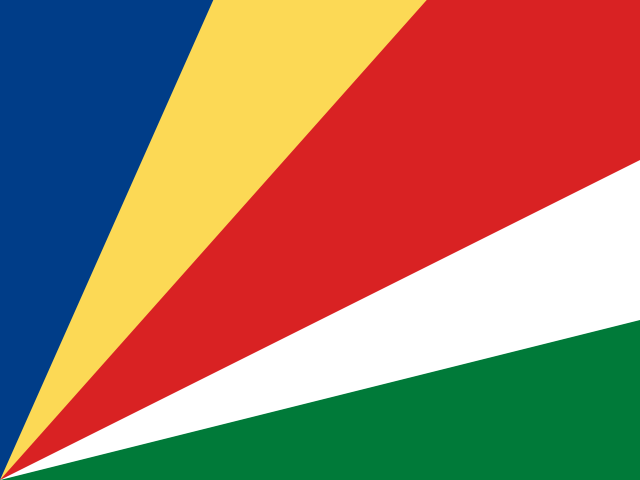
 Seychelles
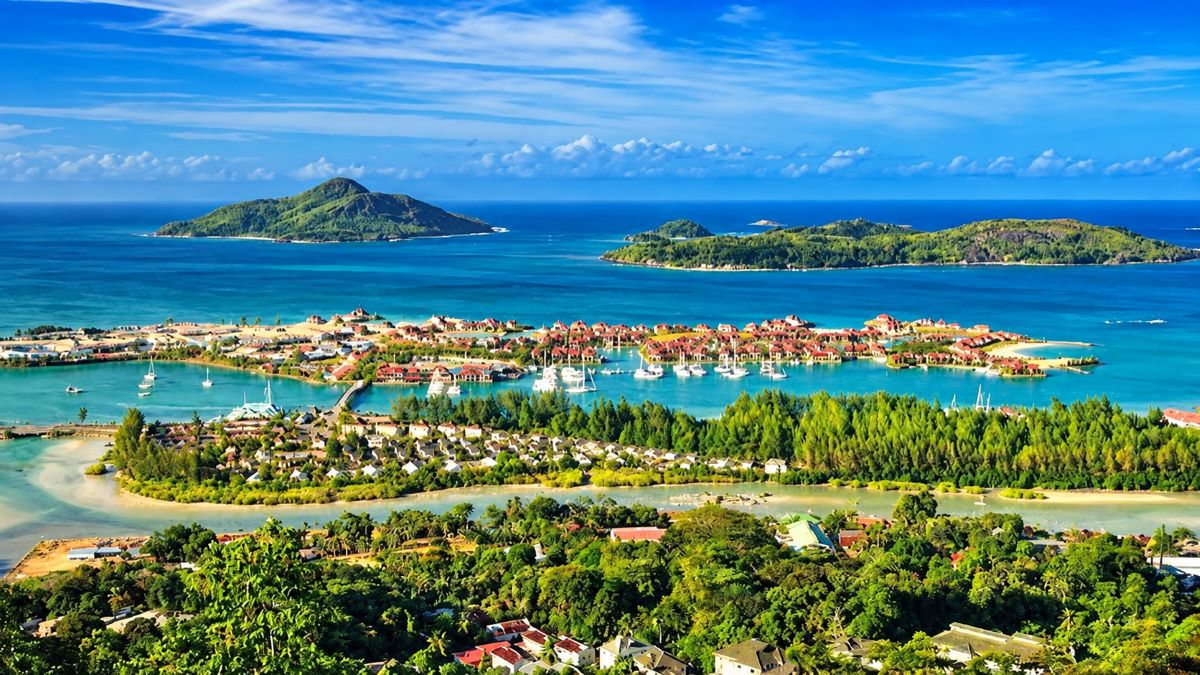 #South Africa#Seychelles

 SomaliaIndian Ocean beaches, ancient rock art and camel country
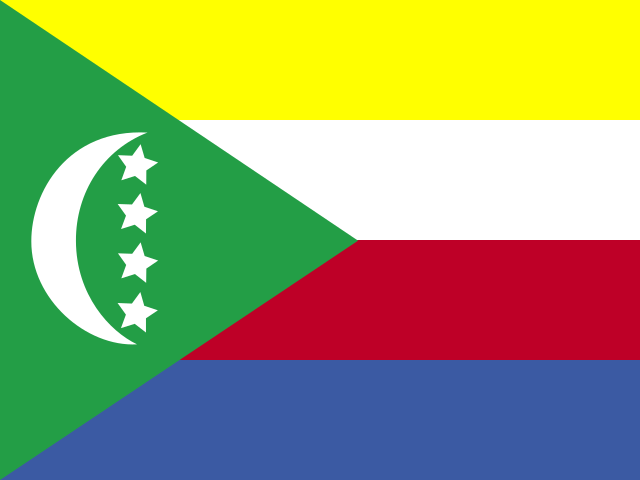 ComorosPerfume islands of volcanoes, vanilla and quiet reefs
.jpg/500px-Flic_en_Flac_Beach_in_Mauiritius_(53697781931).jpg)
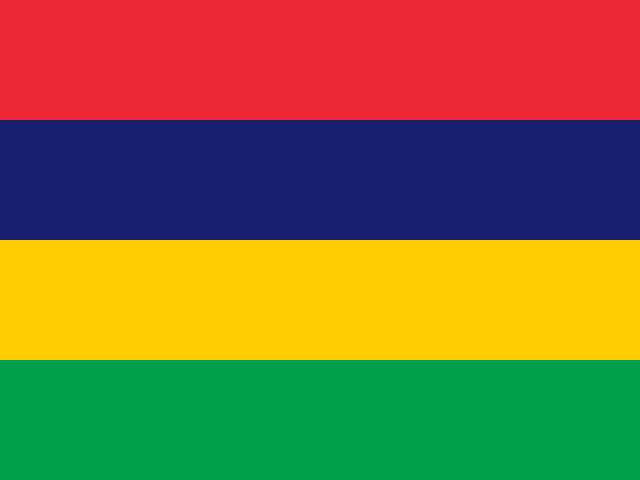 MauritiusTurquoise lagoons, volcanic peaks and a mix of cultures
 MadagascarLemurs, baobab avenues and wild island landscapes
 ReunionVolcano hikes, deep cirques and Creole flavours
 KenyaGreat Migration safaris, Indian Ocean beaches and Swahili towns
,_Maldives_14.jpg/500px-Flora_of_Maafushi_(Kaafu_Atoll),_Maldives_14.jpg)

 MaldivesTurquoise lagoons, coral atolls and overwater villas
 EthiopiaRock-hewn churches, high mountains and the birthplace of coffee