Guadeloupe's butterfly-shaped islands were first settled by Amerindian peoples from South America, who left carved rock engravings still visible in the forests of Basse-Terre. By the time Europeans arrived, the Kalinago (Island Caribs) lived here and called the main island Karukera, often translated as 'island of beautiful waters'. Christopher Columbus sighted it in 1493 and named it after a Spanish monastery, Santa María de Guadalupe.
France established a colony in 1635, and within decades the islands were covered in sugar plantations worked by enslaved Africans. Guadeloupe was fought over with Britain several times. During the French Revolution slavery was abolished in 1794, but Napoleon restored it in 1802, provoking a heroic resistance led by Louis Delgrès, who chose death rather than surrender at Matouba. Slavery was finally abolished in 1848 thanks in part to campaigner Victor Schœlcher.
Read the full history
After abolition, workers from India arrived under indenture contracts, adding Hindu temples, colombo curry and new festivals to the Creole mix of African, European and Asian heritage. In 1946 Guadeloupe became an overseas department of France, and it is today an outermost region of the European Union, using the euro. A strong Creole identity thrives through music like gwoka – recognised by UNESCO – as well as language, food and carnival.
For visitors, this history is woven into the landscape: plantation houses and rum distilleries, Fort Delgrès in Basse-Terre and the striking Mémorial ACTe in Pointe-à-Pitre, a museum dedicated to the memory of slavery. Around them lie volcanic rainforests, waterfalls, coral reefs and some of the most beautiful beaches in the Caribbean.
Timeline
c. 300 BC-AD 1500Successive Amerindian peoples settle the islands
1493Columbus sights the island and names it Guadeloupe
1635French colonists settle Guadeloupe
1794Slavery first abolished during the French Revolution
1802Slavery restored; Louis Delgrès leads resistance at Matouba
1848Final abolition of slavery
1946Guadeloupe becomes a French overseas department
2015Mémorial ACTe opens in Pointe-à-Pitre
Guadeloupe🛂 Visa & entry
Entry rules depend on your passport and change often.
European Union – EU member – EU/EEA citizens can travel and stay freely.
Eurozone – Uses the euro.
Before you book, check the official rules for your passport:
Exercise normal precaution in Guadeloupe. Guadeloupe is generally a safe destination for travelers. Guadeloupe regularly experiences hurricanes. Review our information on Weather and Natural Disasters in Guadeloupe. Review our…
Climb La SoufrièreHike through cloud forest to the steaming summit of the Lesser Antilles' highest volcano.
See the Carbet FallsWalk through rainforest to the tumbling cascades on the slopes of La Soufrière.
Snorkel the Cousteau ReserveSwim among turtles and coral gardens around the Pigeon Islets off Malendure.
Watch sunrise at Pointe des ChâteauxStand on the wild, wave-battered headland at Grande-Terre's eastern tip.
Island-hop to Les SaintesTake a ferry to Terre-de-Haut for a pretty bay, Fort Napoléon and laid-back village life.
Tour a rum distilleryLearn how rhum agricole is made from fresh cane juice on Basse-Terre or Marie-Galante.
Visit the Mémorial ACTeExplore the powerful museum on slavery and Caribbean history in Pointe-à-Pitre.
Kayak through the mangrovesPaddle the Grand Cul-de-Sac Marin lagoon, a protected area of mangroves and reef.
Dance to gwokaJoin an evening léwòz, where drummers and dancers keep the island's African-rooted music alive.
Eat at a beach loloTry accras, colombo and grilled fish at a simple seaside shack.
Guadeloupe🗺️ Where to visit in Guadeloupe
Where to go in Guadeloupe
📍
Basse-TerreWestern island · volcano & rainforestMountainous and green, with the national park, waterfalls, hot springs and black-sand beaches.
📍
Grande-TerreEastern island · beachesFlatter limestone island with white-sand beaches around Sainte-Anne and Saint-François.
DeshaiesNorthwest Basse-Terre · village & beachA colourful fishing village near Grande Anse, one of Guadeloupe's finest beaches.
Les SaintesSouthern islands · baysA small archipelago with a beautiful bay, forts and a relaxed Breton-influenced village.
📍
Marie-GalanteSouthern island · rum & beachesKnown as 'the island of a hundred windmills', with empty beaches and famous rum.
Pointe-à-PitreMain town · markets & historyBusy markets, colonial streets and the Mémorial ACTe museum.
📍
La DésiradeEastern island · nature reserveA quiet, arid island with geological reserve status, iguanas and peaceful beaches.
📍
Guadeloupe National ParkBasse-Terre · protected forestA UNESCO biosphere reserve of rainforest trails, rivers and volcanic peaks.
Guadeloupe✨ Must-do experiences
Hike La Soufrière volcano
Snorkel the Cousteau Reserve near Pigeon Island
Visit a rum distillery
Island-hop to Les Saintes and Marie-Galante
Guadeloupe🍽️ Taste of Guadeloupe
Bokit – fried bread sandwich with fillings
Accras – crispy salt-cod fritters
Colombo – Creole curry with chicken or goat
Ti' punch – rum, lime and cane sugar drink
Guadeloupe🌦️ Weather & best time to visit Guadeloupe
Best time to visit Guadeloupe
Guadeloupe is warm and tropical all year, with trade winds keeping temperatures pleasant. Mountainous Basse-Terre is far wetter than flat Grande-Terre, and the hurricane season runs from June to November.
BestDecember-April – the dry season brings sunshine, lower humidity and calm seas, ideal for beaches and hiking.
ShoulderMay-June and November – fewer visitors and good prices, with some showers.
AvoidAugust-October – the peak of the Atlantic hurricane season, with heavy rain and the occasional storm.
29°💧Jan
29°💧Feb
29°💧Mar
30°💧Apr
31°💧💧May
31°💧Jun
31°💧💧Jul
32°💧💧Aug
32°💧💧Sep
31°💧💧Oct
30°💧💧Nov
29°💧Dec
Typical daytime highs and rain in Pointe-à-Pitre (approximate averages).
Guadeloupe🎉 Festivals & events in Guadeloupe
January-February (until Ash Wednesday)
CarnivalWeeks of parades with drum groups and costumed bands, ending with the burning of King Vaval.
August
Fête des CuisinièresWomen cooks in Creole dress parade through Pointe-à-Pitre before a grand feast honouring their patron saint.
27 May
Abolition of Slavery DayA public holiday commemorating emancipation with cultural events and ceremonies.
November (every four years)
Route du Rhum finishSolo sailors from France arrive in Pointe-à-Pitre at the end of a famous transatlantic race.
Guadeloupe🧭 Guadeloupe itinerary ideas
How many days in Guadeloupe?
5 daysBeaches and rainforest
Day 1-2 explore Grande-Terre's beaches and Pointe des Châteaux. Day 3-4 head to Basse-Terre for the Carbet Falls, Cousteau Reserve and Deshaies. Day 5 take a day trip to Les Saintes.
10 daysThe whole archipelago
Day 1-3 Grande-Terre, including Pointe-à-Pitre and Sainte-Anne. Day 4-6 Basse-Terre with La Soufrière, waterfalls and snorkelling. Day 7-8 Les Saintes, and Day 9-10 Marie-Galante for rum, windmills and quiet beaches.
Guadeloupe🎒 Backpacking Guadeloupe – tips & hacks
Backpacker budget: about $70–100 a day
Public buses are cheap but infrequent and stop early in the evening; renting a car is easiest for exploring.
Self-catering gîtes and small guesthouses are more affordable than hotels, especially when shared.
Buy fruit, vegetables and spices at local markets and eat at lolos for cheaper Creole meals.
Ferries to Les Saintes and Marie-Galante are reasonable; book in advance in high season.
Free hiking trails in the national park make for budget-friendly adventures.
Guadeloupe🛡️ Safety & money in Guadeloupe
Stay safe
Guadeloupe is generally safe, but don't leave valuables in cars or unattended on beaches.
Check volcanic activity updates and trail conditions before hiking La Soufrière.
Follow weather alerts during hurricane season and heed any warnings.
Beware of strong currents on Atlantic-facing beaches and avoid touching manchineel trees, whose sap and fruit are toxic.
Money
The currency is the euro.
Cards are widely accepted, and ATMs are common in towns, though fewer on the small islands.
Service is usually included in restaurant bills; extra tips are appreciated but not expected.
Emergency: 112 general · 17 police · 18 fire · 15 ambulance
Guadeloupe🛬 Getting to Guadeloupe
Pointe-à-Pitre Le Raizet airport receives direct flights from France, North America and other Caribbean islands. Ferries also link Guadeloupe with Dominica, Martinique and Saint Lucia.
Guadeloupe💡 Did you know? 5 facts about Guadeloupe
Guadeloupe is part of the European Union, so you can pay in euros in the Caribbean.
La Soufrière is the highest peak in the Lesser Antilles.
The two main islands are separated only by a narrow channel called the Rivière Salée.
Gwoka music and dance are listed by UNESCO as Intangible Cultural Heritage.
Marie-Galante is famous for its high-proof rum and its many old sugar windmills.
Guadeloupe❓ Guadeloupe travel FAQ
Guadeloupe travel questions
Is Guadeloupe safe for tourists?
Yes, Guadeloupe is generally safe for visitors. Use common sense with valuables, especially in cars and at beaches.
What is the best time to visit Guadeloupe?
December to April is best, with dry, sunny weather. The hurricane season peaks from August to October.
Do I need a visa for Guadeloupe?
It depends on your passport – Guadeloupe is French territory but has its own entry rules separate from the Schengen area. Check the official French government site or embassy before you travel.
What language is spoken in Guadeloupe?
French is the official language, and Guadeloupean Creole is widely spoken. English is less common, so some French helps.
How many days do I need in Guadeloupe?
A week is enough to see both main islands. Ten days lets you add Les Saintes and Marie-Galante.
Guadeloupe💰 What a trip costs
$$$price level
$70–100backpacker / day
$150–280mid-range / day
Approximate daily cost per person (stay, food, local transport).
Guadeloupe🚌 Getting around
A rental car is the easiest way to explore; buses run between towns but are infrequent. Ferries connect to Les Saintes, Marie-Galante and La Désirade.
Guadeloupe🛕 Sacred & spiritual places
Cathedral of St. Peter and St. Paul – Iron-framed church in Pointe-à-Pitre built to withstand hurricanes
Guadeloupe🤝 Local etiquette
Say bonjour when entering shops and greeting people
Cover up beachwear away from the beach
French is the main language, so a few words help a lot
Nothing in this tab yet – the agents add new stories every few minutes.
📰 Older Guadeloupe stories Everything our agents ever found – keeps loading as you scroll



 MontserratEmerald Isle of the Caribbean, shaped by a living volcano
 Antigua and BarbudaA beach for every day of the year and historic harbours
 DominicaThe Caribbean's wild nature island of waterfalls and hot springs
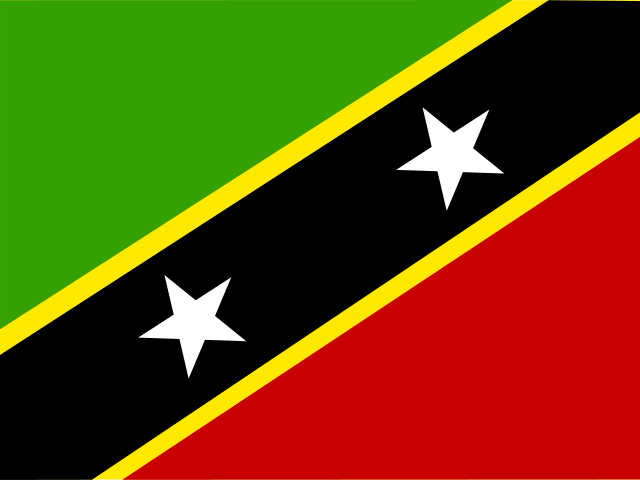 Saint Kitts and NevisTwin islands of fortresses, volcano peaks and calm beaches
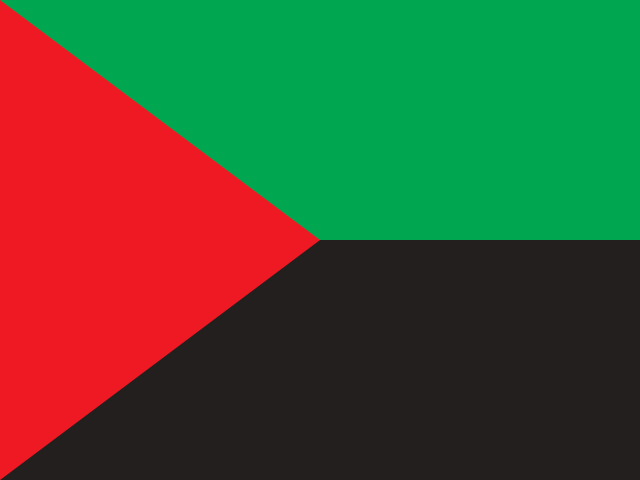 MartiniqueFrench Caribbean island of flowers, rum and volcanoes
,_St_Maarten,_Oct_2014_(15709089025).jpg/500px-Mullet_Bay_(after_Gonzalo),_St_Maarten,_Oct_2014_(15709089025).jpg)
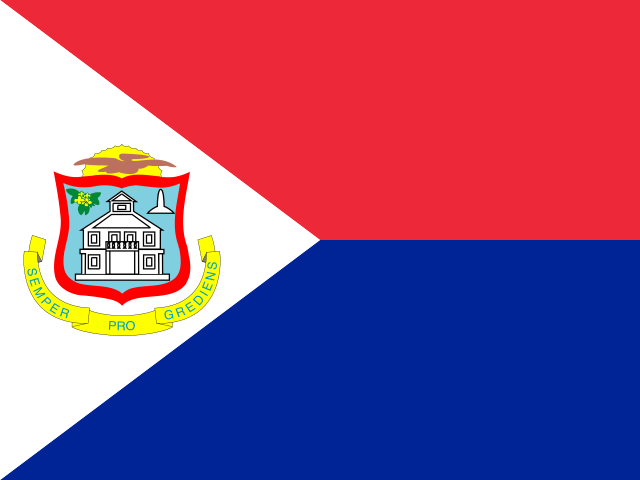 Sint MaartenPlanes over the beach, duty-free shops and island nightlife
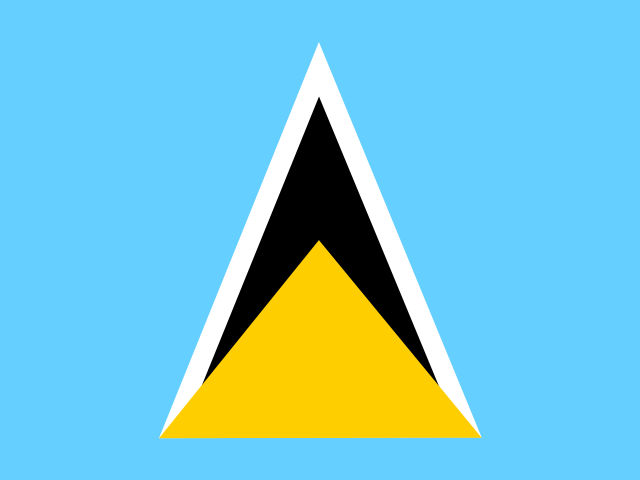 Saint LuciaTwin Pitons, rainforest and volcanic hot springs
 AnguillaQuiet luxury and powder-white Caribbean beaches