


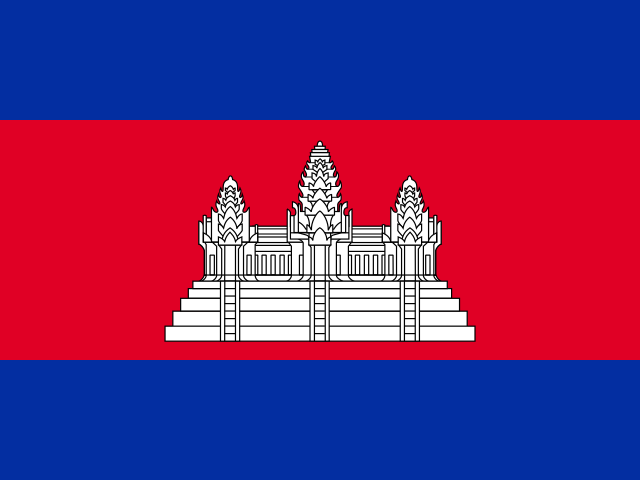
Cambodia📸 Photo album · 7 photos · Ultra-HD
 Angkor Wat
Angkor's temples, river cities and quiet island beaches
🕒 –:– local time5 stories this week3 sources 6 top placesCapital Phnom Penh
People have farmed the rich floodplains of the Mekong and Tonle Sap for thousands of years. From around the 1st century AD, the trading kingdom of Funan flourished in the delta, absorbing Indian ideas of kingship, Hinduism and Buddhism, followed by the inland kingdom of Chenla. In 802 Jayavarman II proclaimed himself universal monarch, founding the Khmer Empire that would rule much of mainland Southeast Asia for over four centuries.
From its capital at Angkor, the empire built an astonishing network of temples, reservoirs and canals. Suryavarman II raised Angkor Wat in the 12th century, and Jayavarman VII added the city of Angkor Thom with the smiling stone faces of the Bayon. Pressure from Siam, shifting trade routes and changing water systems slowly weakened the empire, and after Ayutthaya's forces took Angkor in the 15th century the royal capital moved south towards Phnom Penh. For the next few centuries Cambodia was squeezed between powerful neighbours in Siam and Vietnam.
In 1863 the king accepted a French protectorate, and Cambodia became part of French Indochina. Independence came peacefully in 1953 under King Norodom Sihanouk. The following decades were deeply tragic: the country was drawn into the conflicts of the Vietnam War era, and the Khmer Rouge regime of 1975–1979 emptied the cities and caused immense suffering. Years of conflict followed until the 1991 Paris Peace Agreements and UN-organised elections in 1993, when the monarchy was restored.
Today Cambodia is a young, energetic country, and travellers are welcomed with real warmth. The temples of Angkor, a UNESCO World Heritage Site, are the undoubted highlight, but visitors can also explore jungle-wrapped ruins at Koh Ker and Sambor Prei Kuk, learn about recent history at memorial sites in Phnom Penh, and enjoy Khmer dance, cooking and island life on the southern coast.
Entry rules depend on your passport and change often.
Before you book, check the official rules for your passport:
The latest visa and entry news for Cambodia appears below as soon as publishers report it.
Cambodia Travel Visa Process Changes as Overseas Embassies and Consulates End Passport Stickers Cambodia has stopped issuing passport visa stickers at overseas embassies and consulates, changing the application route for…
 #Cambodia#Passports#Visas & Entry Rules
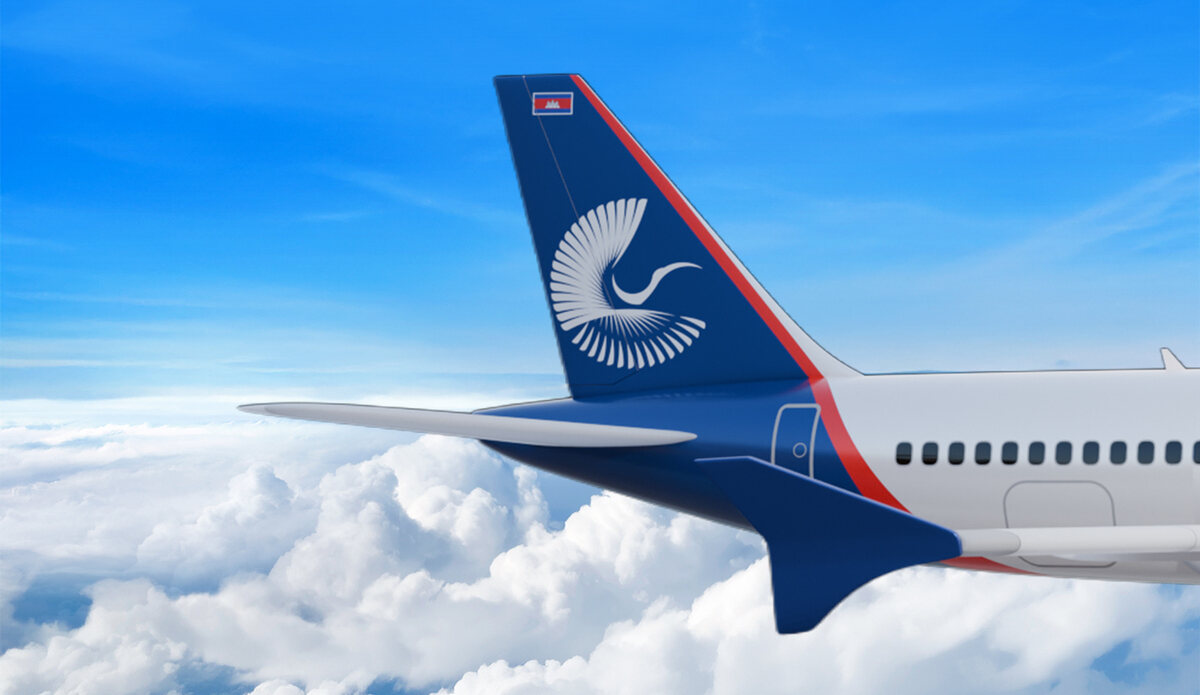
Air Cambodia Expands India–Cambodia Connectivity With Third Weekly Delhi–Phnom Penh Flight From December 2026 Air Cambodia has announced the launch of its third weekly direct flight from New Delhi to Phnom Penh on 17 December…
 #Cambodia#India#Delhi#Phnom Penh
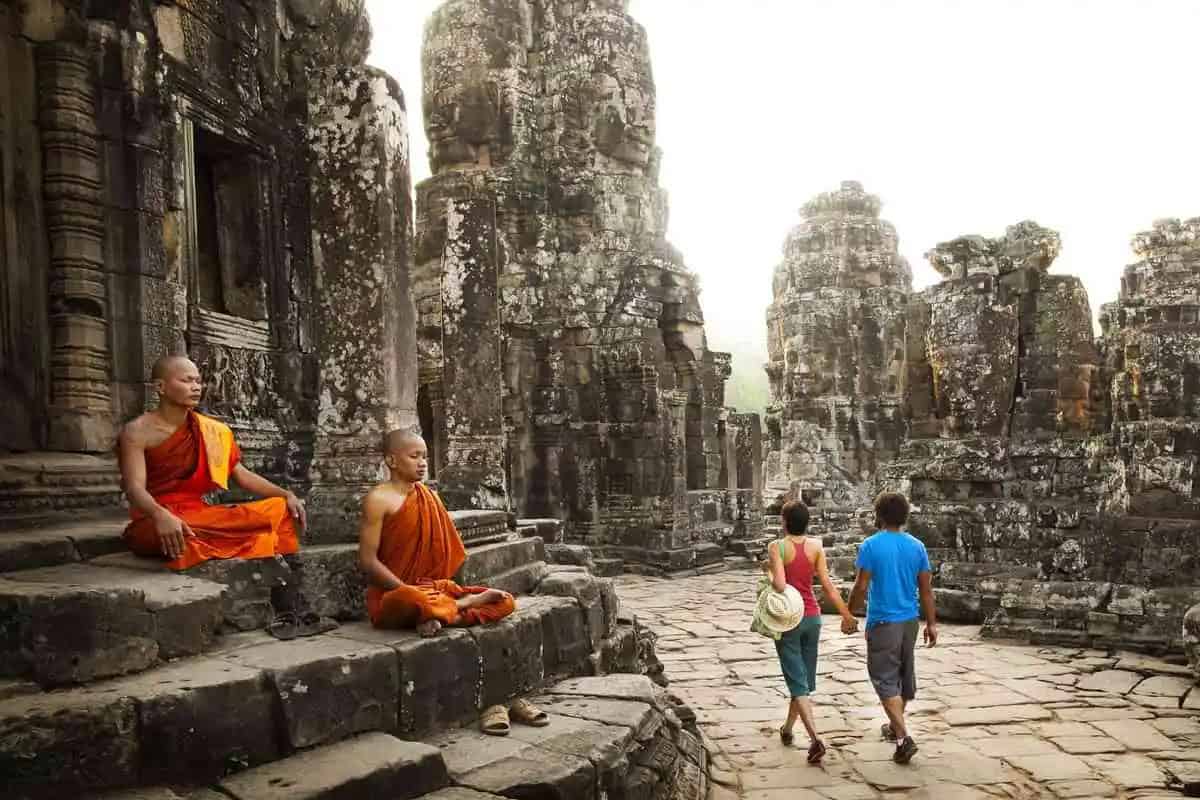
Siem Reap Goes Hand in Hand with Phuket and Other Cities Coping with a Pullback in European Tourism Demand in 2026 Discover how the sharp pullback in European tourism demand in 2026 is reshaping economies, visa policies, and…
 #Cambodia#Thailand#Siem Reap#Phuket
A good sale to Phnom Penh Sample Travel Date: January 20th – 27th, 2027 This is just ONE SAMPLE travel date, for
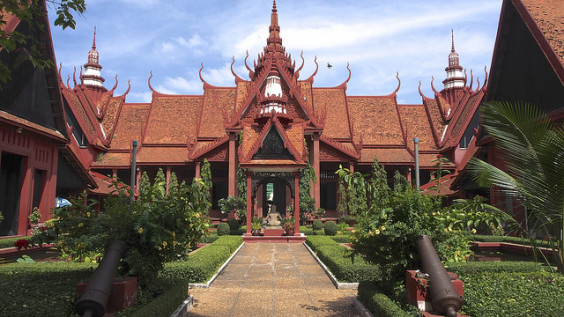 #Cambodia#Hong Kong#San Francisco#Phnom Penh
Exercise increased caution in Cambodia due to crime , unrest , and unexploded ordnance . Exercise increased caution in Cambodia due to crime , unrest , and unexploded ordnance . Some areas have increased risk. Read the entire…
#Cambodia#Visas & Entry RulesCambodia is hot all year with a dry season from November to April and a monsoon from May to October. The southern coast and eastern highlands catch the most rain, while the hilly northeast is cooler.
Typical daytime highs and rain in Phnom Penh (approximate averages).
Day 1-3 explore the temples of Angkor from Siem Reap, including sunrise at Angkor Wat, the Bayon and Ta Prohm, plus a Tonle Sap boat trip. Day 4-5 head to Phnom Penh for the Royal Palace, markets and memorial sites.
Day 1-3 Siem Reap and Angkor, then Day 4 Battambang's countryside. Day 5-6 Phnom Penh, Day 7-8 Kampot and Kep for pepper farms and crab, and Day 9-10 relax on Koh Rong or Koh Rong Samloem.
Backpacker budget: about $25–40 a day
Emergency: 117 police · 118 fire · 119 ambulance
International flights arrive at Phnom Penh and at Siem Reap's newer Angkor airport, both well connected to regional hubs. Land borders link Cambodia with Thailand, Vietnam and Laos, but check the latest status, as crossings can close at short notice.
✈️ Cheap flights to Cambodia: airports, flight times & best time to fly →
Cambodia is generally safe for travellers. The main risks are petty theft, road accidents and unexploded ordnance in remote areas, so stay on marked paths. Check your government's latest travel advice before you go.
November to February is cool and dry, ideal for Angkor. The green season from May to October is quieter and lush, with afternoon rain.
Two to three days lets you see the major temples at a comfortable pace, including Angkor Wat, the Bayon and Ta Prohm. Temple enthusiasts may want longer to visit outlying sites like Banteay Srei and Beng Mealea.
It depends on your passport. Check the official Cambodian government site or your nearest embassy before you travel, and use only official channels for any applications.
US dollars are widely used alongside the riel, and ATMs dispense dollars. Bring clean, untorn notes, as damaged bills are often refused.
Approximate daily cost per person (stay, food, local transport).
Buses and minivans link major towns, and some domestic flights are available. In cities, tuk-tuks and ride-hailing apps are cheap and easy.
Nothing in this tab yet – the agents add new stories every few minutes.
🌏 You reached the start of our archive.


 VietnamLimestone bays, lantern towns and amazing street food

 ThailandGolden temples, island beaches and world-famous food
.jpg/500px-LPB_Guest_Houses_(1490224551).jpg)
 LaosGolden temples, Mekong sunsets and lush mountains
 MalaysiaRainforests, island beaches and a mix of food cultures
 SingaporeGarden city of hawker food, skyscrapers and culture
.jpg/500px-Tasek_Merimbun_Heritage_Park.Brunei._(9565514695).jpg)
 BruneiGolden mosques, water villages and untouched rainforest
 MacauPortuguese heritage, glittering resorts and egg tarts
 MyanmarGolden pagodas, temple plains and calm lakes