People have lived in the land now called Ghana for many thousands of years, and by the first millennium AD farming communities and trading towns were flourishing. The country takes its name from the ancient Ghana Empire, which lay far to the north-west in today's Mali and Mauritania, a nod to the proud heritage of West African kingdoms. Gold from the region's forests travelled across the Sahara to North Africa and beyond, linking the area to global trade.
From around the fifteenth century, Akan states rose in the forest zone, and by the eighteenth century the Asante kingdom, centred on Kumasi, had become one of the most powerful in West Africa, famous for its gold, kente cloth and the sacred Golden Stool. In the north, kingdoms such as Dagbon traded with the Sahel, and the Larabanga Mosque is said to be one of the oldest in the region. Portuguese traders built Elmina Castle in 1482, and soon Dutch, British, Danish and Swedish forts lined the coast.
Read the full history
These forts became central to the transatlantic slave trade, through which vast numbers of Africans were forcibly shipped to the Americas. Britain gradually expanded its control, fought several wars against the Asante and declared the Gold Coast colony, adding Asante and the north by the early twentieth century. Cocoa farming boomed, and an educated elite and returning war veterans pushed for self-rule. Under Kwame Nkrumah, the Gold Coast became Ghana on 6 March 1957, the first sub-Saharan African colony to win independence.
After decades of military coups and changes of government, Ghana returned to multiparty democracy in 1992 and has since been known for peaceful elections. For visitors, its history is powerfully present: the castles of Cape Coast and Elmina, the Manhyia Palace in Kumasi, the Nkrumah Memorial in Accra and vibrant festivals that honour chiefs and ancestors. Many people of the African diaspora travel here to reconnect with their roots, welcomed by the famous Ghanaian greeting 'Akwaaba'.
Timeline
c. 1400sAkan states develop in the forest zone
1482Portuguese build Elmina Castle
1701The Asante kingdom is consolidated under Osei Tutu
1874Britain proclaims the Gold Coast Colony
1902Asante and the Northern Territories come under British rule
1957Ghana becomes independent under Kwame Nkrumah
1992Return to multiparty democracy
2019The 'Year of Return' welcomes the African diaspora
Ghana🛂 Visa & entry
Entry rules depend on your passport and change often.
ECOWAS – ECOWAS member – West African citizens can usually travel within the bloc.
Commonwealth – Commonwealth member.
Before you book, check the official rules for your passport:
Ghana Opens a Free Visa Route for African Travellers in a Major Tourism Move Ghana’s free e-visa for African passport holders leads a look at changing entry rules and tourism trends across Africa in 2026.
Etihad Airways Expands Nigeria Reach With Ibom Air as Lagos and Accra Flights Begin in 2027 Etihad Airways will be reinforcing its plan of expansion into West Africa with a recent interline partnership with the Nigerian airline…
Tour Cape Coast CastleWalk through the dungeons and the 'Door of No Return' on a moving guided tour of this UNESCO-listed fort.
Cross the Kakum canopy walkwaySway along rope bridges high above the rainforest floor in Kakum National Park.
Spot elephants in MoleJoin a walking safari in Mole National Park as elephants bathe in the watering holes.
Explore Kumasi's Kejetia MarketLose yourself in one of West Africa's largest markets, then visit the Manhyia Palace Museum.
Watch kente weavers at workVisit the weaving village of Bonwire to see the famous colourful cloth woven by hand.
Relax on the Western Region beachesUnwind at palm-fringed beaches around Busua and Axim, popular for surfing lessons.
Hike to Wli FallsWalk through the forest of the Volta Region to one of the highest waterfalls in West Africa, home to a fruit bat colony.
Feel Accra's nightlifeDance to highlife and Afrobeats in Osu or Labadi beach bars.
Eat jollof and fufuSettle the West African jollof debate for yourself and try fufu with light soup at a chop bar.
Visit the Tafi Atome monkey sanctuaryMeet sacred mona monkeys protected by the local community in the Volta Region.
Ghana🗺️ Where to visit in Ghana
Where to go in Ghana
📍
AccraCapital · culture & nightlifeA lively capital with Jamestown's lighthouse, the Nkrumah Memorial, art galleries and beach bars.
📍
Cape CoastCentral Region · historyHome to the UNESCO-listed Cape Coast Castle and a gateway to Kakum National Park.
ElminaCentral Region · castle & fishing townThe oldest European building in sub-Saharan Africa overlooks a colourful fishing harbour.
KumasiAshanti Region · Asante cultureThe historic capital of the Asante kingdom, with royal palaces, markets and crafts villages nearby.
Mole National ParkSavannah Region · wildlifeGhana's largest park, where walking safaris bring you close to elephants and antelope.
Kakum National ParkCentral Region · rainforestTropical forest famous for its canopy walkway and birdlife.
📍
Volta RegionEast · waterfalls & mountainsGreen hills, Wli Falls, Mount Afadja and the vast Lake Volta.
📍
BusuaWestern Region · beachA relaxed beach village with surf schools and seafood by the sea.
Ghana✨ Must-do experiences
Walk the canopy bridges of Kakum
Tour Cape Coast and Elmina castles
Explore Kumasi's Kejetia market
Join a walking safari with elephants in Mole
Ghana🍽️ Taste of Ghana
Jollof rice – spicy tomato rice
Fufu – pounded cassava and plantain with soup
Waakye – rice and beans with sides
Kelewele – spicy fried plantain
Ghana🌦️ Weather & best time to visit Ghana
Best time to visit Ghana
Ghana is tropical, hot and humid along the coast with two rainy seasons in the south. The north is hotter and drier, with a single rainy season from roughly May to October.
BestNovember to March – the dry season, with less rain and good conditions for travel and wildlife viewing.
ShoulderJuly to August – a short drier spell in the south, with cooler temperatures.
AvoidApril to June and September to October – rainy periods in the south can make rural roads difficult; dusty Harmattan winds can reduce visibility in December and January.
32°☀️Jan
32°☀️Feb
32°💧Mar
32°💧Apr
31°💧💧May
29°💧💧💧Jun
28°💧Jul
27°💧Aug
28°💧Sep
30°💧💧Oct
31°💧Nov
32°☀️Dec
Typical daytime highs and rain in Accra (approximate averages).
Ghana🎉 Festivals & events in Ghana
August–September
HomowoThe Ga people of Accra celebrate the harvest by 'hooting at hunger' with food, dance and processions.
Late July–August
Panafest and Emancipation DayEvents in Cape Coast and beyond honour African heritage and the diaspora.
August
Chale Wote Street Art FestivalJamestown in Accra fills with murals, performances and music for an energetic arts celebration.
Every six weeks
AkwasidaeAn Asante festival in Kumasi where chiefs gather in splendour to honour their ancestors.
6 March
Independence DayParades and celebrations mark Ghana's independence in 1957.
Ghana🧭 Ghana itinerary ideas
How many days in Ghana?
5 daysAccra and the coast
Day 1-2: explore Accra's markets, Jamestown and Labadi Beach. Day 3-4: head to Cape Coast and Elmina for the castles and Kakum's canopy walkway. Day 5: return to Accra via the fishing villages of the coast.
10 daysGhana's heartland
Day 1-2: Accra. Day 3-4: Cape Coast, Elmina and Kakum. Day 5-6: travel to Kumasi for markets, palaces and craft villages. Day 7-8: continue north to Mole National Park for elephants. Day 9-10: return south via the Volta Region for waterfalls and monkey sanctuaries.
Ghana🎒 Backpacking Ghana – tips & hacks
Backpacker budget: about $30–50 a day
Trotros (shared minibuses) are the cheapest way to get around and go almost everywhere; larger intercity coaches are more comfortable for long trips.
Accra's Osu district and beach towns like Busua and Kokrobite have budget guesthouses popular with backpackers.
Eat at chop bars and street stalls for cheap, filling meals of waakye, kelewele and red-red.
Buy a local SIM card for data and mobile money, which is widely used even in small shops.
Learn a few Twi greetings – they win smiles and help when bargaining in markets.
Ghana🛡️ Safety & money in Ghana
Stay safe
Ghana is one of West Africa's safer destinations, but watch for pickpockets in busy markets and stations.
Avoid walking alone on beaches or in quiet areas after dark, and use trusted taxis or ride-hailing apps at night.
Road accidents are a major risk; avoid long-distance travel at night.
Take malaria precautions and drink bottled or filtered water. Check your government's latest travel advice for the far north border areas.
Money
The currency is the Ghanaian cedi (GHS); ATMs are common in cities but scarce in rural areas.
Cards are accepted in upmarket hotels and restaurants, but cash and mobile money are king elsewhere.
Tipping around 10% is appreciated in restaurants, and small tips for guides and porters are common.
Kotoka International Airport in Accra is the main gateway, with flights from Europe, the Middle East, North America and across Africa. Land borders connect Ghana with Togo, Burkina Faso and Côte d'Ivoire.
Ghana was the first sub-Saharan African colony to gain independence, in 1957.
Lake Volta is one of the largest man-made lakes in the world by surface area.
Ghana is one of the world's leading cocoa producers.
Elmina Castle is the oldest European-built structure still standing in sub-Saharan Africa.
Each kente cloth pattern has its own name and meaning, often linked to proverbs or historical events.
Ghana❓ Ghana travel FAQ
Ghana travel questions
Is Ghana safe for tourists?
Ghana is considered one of the safest and friendliest countries in West Africa. Use normal precautions against petty theft and be cautious on the roads, and check your government's travel advice for border areas.
When is the best time to visit Ghana?
November to March is the dry season and the most comfortable time to travel. The rainy months can make rural roads hard going.
How many days do you need in Ghana?
Five days covers Accra and the coastal castles. Ten days or more lets you add Kumasi, Mole National Park and the Volta Region.
Do I need a visa for Ghana?
It depends on your passport – check the official government site or a Ghanaian embassy before you travel.
What language is spoken in Ghana?
English is the official language, so getting around is easy. Many local languages are spoken too, with Twi the most widely understood.
Ghana💰 What a trip costs
$$price level
$30–50backpacker / day
$80–150mid-range / day
Approximate daily cost per person (stay, food, local transport).
Ghana🚌 Getting around
Air-conditioned coaches and domestic flights link major cities. Tro-tros (shared minibuses), taxis and ride-hailing apps are common in towns.
Ghana🛕 Sacred & spiritual places
Larabanga Mosque – One of West Africa's oldest mud-and-stick mosques
Lake Bosumtwi – Crater lake considered sacred by the Ashanti people
Ghana🤝 Local etiquette
Greet people before any conversation
Use your right hand to eat, give and receive
Show respect to elders and chiefs
Nothing in this tab yet – the agents add new stories every few minutes.
📰 Older Ghana stories Everything our agents ever found – keeps loading as you scroll


.jpg/1920px-Kronum_Kumasi_2018-11-08_(130246).jpg)


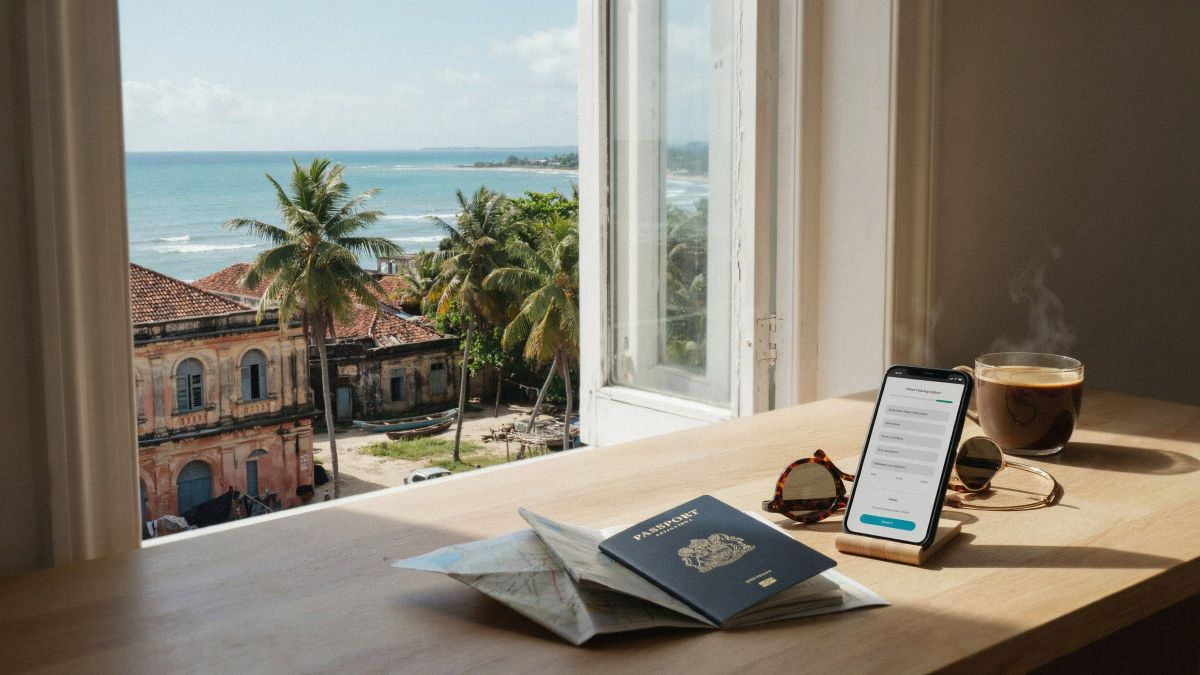 #Ghana#e-Visa#Passports#Visas & Entry Rules
 #United Arab Emirates#Nigeria#Accra#Etihad

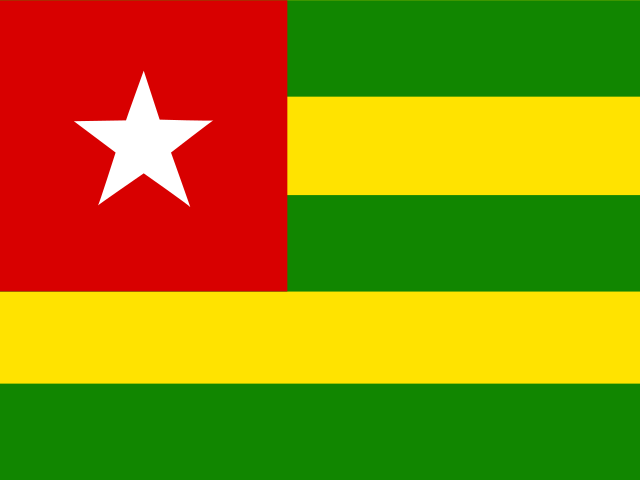 TogoPalm beaches, green hills and colourful markets
_(2).jpg/500px-Ganvi%C3%A9_fishing_village_on_stilts_in_Benin_(10282059623)_(2).jpg)
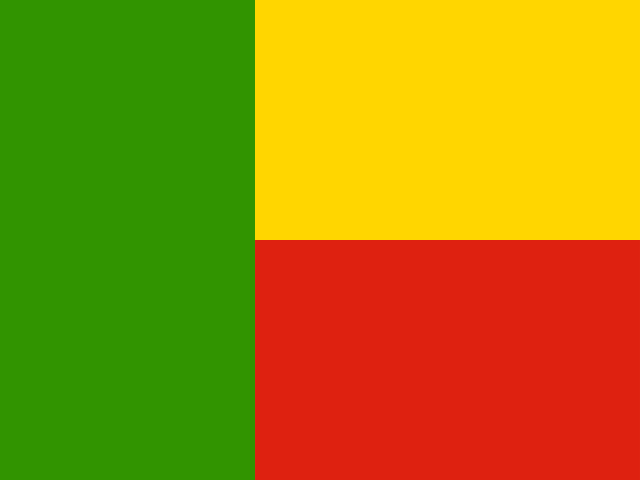 BeninBirthplace of Vodun, royal palaces and a village on stilts
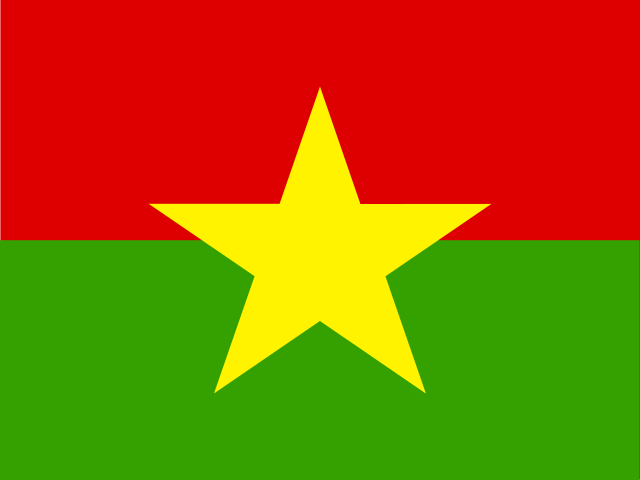 Burkina FasoPainted villages, rock peaks and Africa's biggest film festival
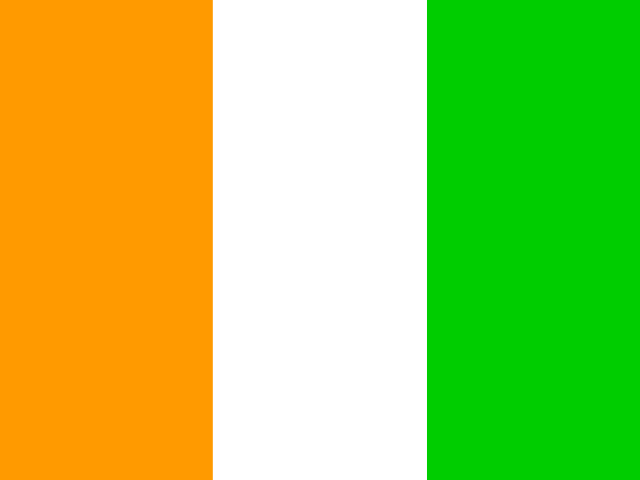 Côte d'IvoireA giant basilica, lagoon city life and palm-fringed beaches
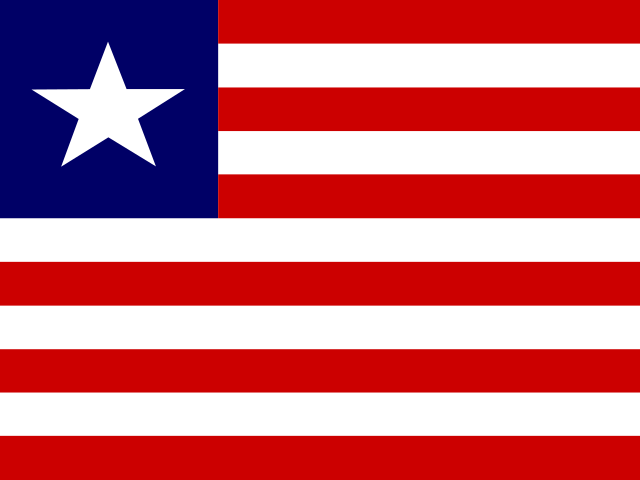 LiberiaSurf beaches, rainforest and Africa's oldest republic
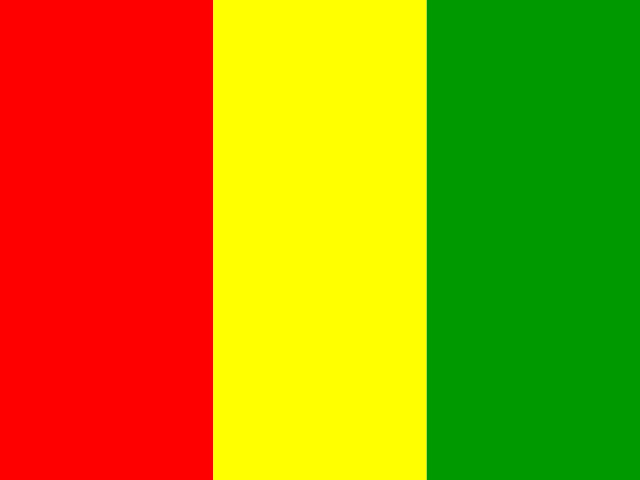 GuineaGreen highlands, waterfalls and the source of great rivers
 NigeriaBig-city energy, Afrobeats and lush highlands
 MaliMud mosques, Niger River towns and Sahel music