


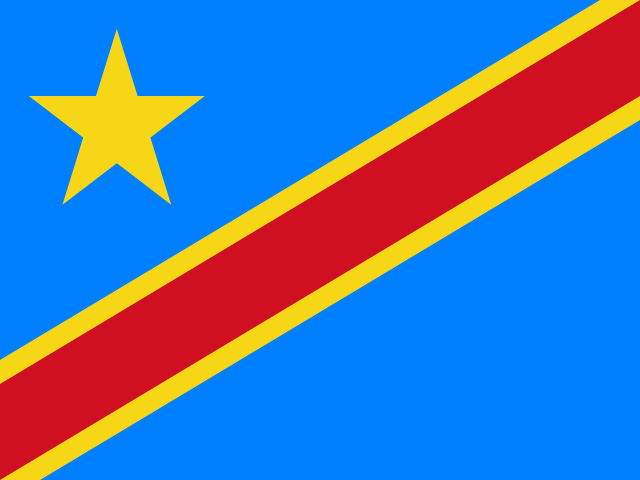
DR Congo📸 Photo album · 6 photos · Ultra-HD
Mountain gorillas, lava lakes and the mighty Congo River
🕒 –:– local time3 stories this week2 sources 6 top placesCapital Kinshasa
The vast Congo Basin has been inhabited for tens of thousands of years, first by forest hunter-gatherer peoples such as the Mbuti and Batwa, and later by Bantu-speaking farmers who spread ironworking and agriculture along its rivers. Powerful states emerged over the centuries: the Kingdom of Kongo near the Atlantic coast, the Luba and Lunda empires of the southern savannas, and the Kuba kingdom, whose carved masks and raffia textiles are prized by museums worldwide.
Portuguese navigators reached the mouth of the Congo River in 1482, and the Kingdom of Kongo exchanged envoys with Lisbon and Rome, but the Atlantic slave trade brought great suffering to the region. In the late nineteenth century the explorer Henry Morton Stanley's expeditions opened the interior to European ambitions, and in 1885 the territory became the Congo Free State, the personal possession of King Leopold II of Belgium. His regime's brutal exploitation for rubber and ivory caused an international outcry, and in 1908 Belgium took over the colony as the Belgian Congo.
Independence came on 30 June 1960, with Patrice Lumumba as the first prime minister, but the new nation soon faced secession crises and political turmoil. Mobutu Sese Seko took power in 1965 and renamed the country Zaire in 1971. After his rule ended in 1997 the country became the Democratic Republic of the Congo, and the following decades were marked by regional wars and continuing instability in the east, alongside efforts at peace and elections.
For the rare traveller, the DRC holds extraordinary natural and cultural riches: the mighty Congo River, Africa's oldest national park at Virunga, mountain and lowland gorillas, the bonobo found nowhere else, and the volcano Nyiragongo with its lava lake. Kinshasa pulses with Congolese rumba, a musical style recognised by UNESCO, and its stylish sapeurs. However, security varies greatly by region, so up-to-date official advice is essential.
Entry rules depend on your passport and change often.
Before you book, check the official rules for your passport:
The latest visa and entry news for DR Congo appears below as soon as publishers report it.
Do not travel to the Democratic Republic of the Congo (DRC) due to health , crime , unrest , terrorism , and kidnapping Due to the Ebola outbreak in the DRC, the Department of Homeland Security has implemented new restrictions…
#DR Congo#Visas & Entry RulesDo not travel to the Democratic Republic of the Congo (DRC) due to health , crime , unrest , terrorism, and kidnapping. Due to the Ebola outbreak in the DRC, the Department of Homeland Security has implemented new restrictions…
#DR Congo#Visas & Entry RulesOn 01/10/2026, a forest fire started in The Democratic Republic of Congo, until 03/10/2026.
#DR Congo#Weather & AlertsThe DRC straddles the equator, so the central basin is hot, humid and rainy year-round, while regions north and south of it have distinct dry seasons at opposite times of year. The eastern highlands around the Kivu lakes are much cooler and fresher.
Typical daytime highs and rain in Kinshasa (approximate averages).
Day 1-2: Kinshasa's markets, museum, riverfront and a live rumba night. Day 3: a morning at Lola ya Bonobo. Day 4: a day trip to Zongo Falls, if road conditions allow.
Day 1-2: arrive in Goma on Lake Kivu. Day 3-4: overnight trek up Nyiragongo. Day 5-6: gorilla tracking in Virunga with an authorised operator. Day 7-8: travel to Bukavu and Kahuzi-Biega – only ever with official permission and current security guidance.
Backpacker budget: about $50–90 a day
Emergency: 112
N'djili International Airport in Kinshasa is the main gateway; eastern visitors often cross overland from Rwanda into Goma or Bukavu when borders are open, and ferries cross the Congo River to Brazzaville.
✈️ Cheap flights to DR Congo: airports, flight times & best time to fly →
Travel to much of the DRC is advised against by many governments due to armed conflict, crime and instability, particularly in the east. Check your government's latest travel advice, and only visit areas like Virunga with authorised operators when they are open.
Yes, the DRC is home to mountain gorillas in Virunga and eastern lowland gorillas in Kahuzi-Biega. Access depends on the security situation, so check whether parks are open and follow official advice.
June to August is the main dry season around Kinshasa and in the south. Because the country spans the equator, weather varies by region, and safety matters more than season.
Entry rules depend on your passport and can change. Check the official Congolese government site or embassy before you travel, and confirm health certificate requirements too.
French is the official language, while Lingala, Swahili, Kikongo and Tshiluba are widely spoken national languages. Lingala dominates in Kinshasa and Swahili in the east.
Approximate daily cost per person (stay, food, local transport).
Distances are huge and roads limited, so domestic flights are used between regions. Park visits are usually arranged with transport included.
Nothing in this tab yet – the agents add new stories every few minutes.
🌏 You reached the start of our archive.

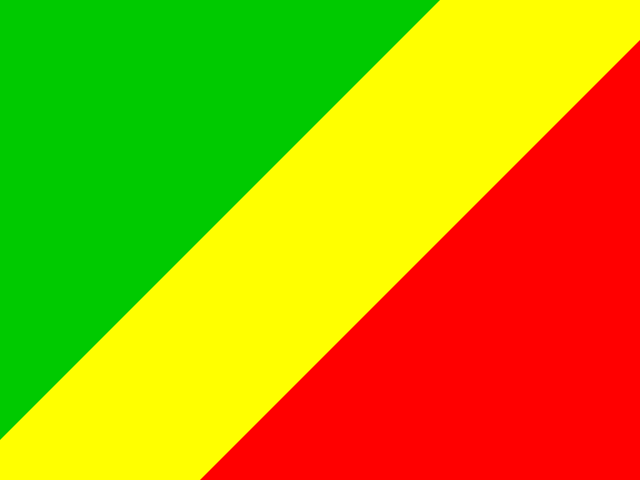 Republic of the CongoRainforest gorillas, the Congo River and Brazzaville
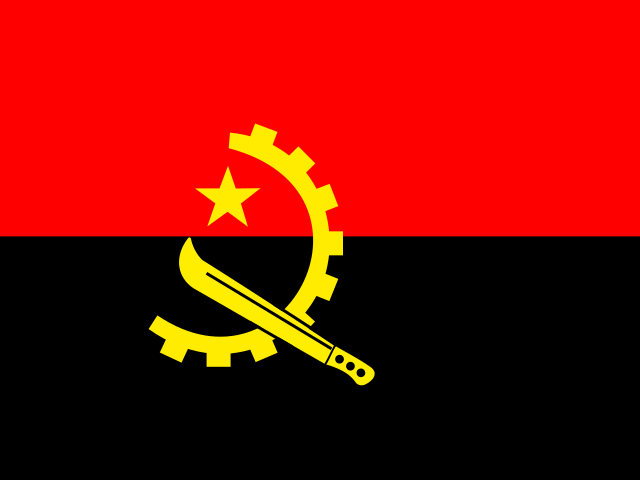 AngolaWild coastlines, giant waterfalls and a booming Atlantic capital
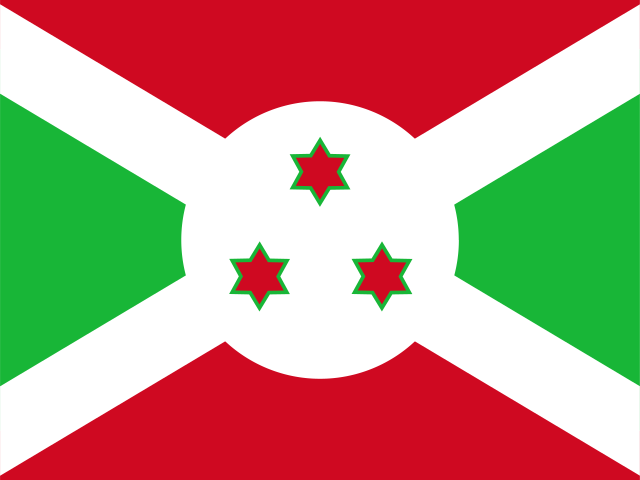 BurundiRoyal drummers, green hills and Lake Tanganyika beaches
 RwandaMountain gorillas, green hills and a clean, modern capital
 GabonRainforest parks where elephants walk on the beach
 Central African RepublicDeep rainforest, forest elephants and the Ubangi River
 ZambiaWalking safaris, mighty falls and the Zambezi River
 UgandaGorillas, the source of the Nile and lush national parks